Thursday, 11 March 2010

Love it or hate it?


Marmite has had a lot of trade press coverage recently, launching their new cereal bars with their most outrageous campaign yet. As part of the campaign they have been the first advertiser to use the new Facebook sampling ads to encourage users to try the new cereal bar and to become fans of the page. This is a truly integrated activity with multiple strands that all pull together to feel like a cohesive rather than disparate campaign.

This is running concurrently with the introduction of Marmite XO, their new extra strong product, which has been named by its Facebook fans and subsequently launched on the site. There has also been a lot of effort put into building the community including special Marmarati events, a first peek at the product and a gallery of peoples’ reactions.

Why this is important for Cadbury?

It’s a great example of an what an FMCG brand can achieve by thoroughly embracing and integrating digital into a broader campaign. Their thinking seems to be closely aligned with Cadbury – pushing for media firsts, thinking carefully how to use social networks and online media, looking after existing fans and creating brand ambassadors. Marmite is in a unique position as a product rarely elicits such polarized responses. They have embraced this to create a brand that everyone you can like, even if you hate the product itself –no mean feat.

Facebook to launch Mobile location features

Facebook have been very slow on utilising their 400 Million+ mobile following by implementing an ad funded model, choosing instead to let the surge to mobile organically improve Facebook updates with spontaneous real-time updates becoming the norm rather than a reflective end of the day update.

Next month this is widely expected to change with the introduction of location based services. Frighteningly this will mean users will then have the option to be visible to their friends wherever they currently are as well as being able to keep up to date with their status updates.

Why is this important for Cadbury?

Facebook already has an incredible amount of data on their users that advertisers have at their disposal but we’ve been waiting for that extra dimension that embraces the evolution into a real-time interaction model. Dependant on when Facebook decide to monetise these changes, Cadbury will soon be able to drive point of sale activity via mobile handset, targeting a specific demographic only when they’re within close proximity of a retailer.

Monday, 1 March 2010

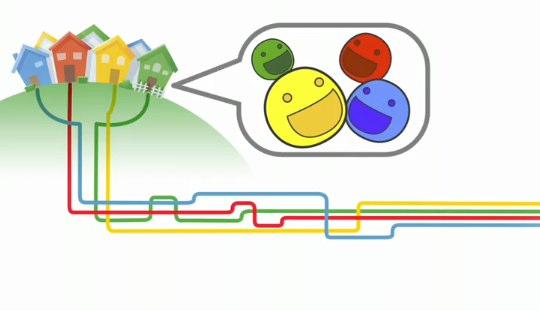
Google Fiber raises the bar for broadband suppliers


Last month in the US Google announced plans to give away high speed broadband up to 1 GB per second – One hundred times faster than we have today. During the trial Google will choose cities with a need for rejuvenation, promising between 50,000 & 500,000 people will have access to the Google Fiber service. Despite speculation that the service will be rolled out worldwide if successful, even as the trial currently stands user expectations from broadband services will no doubt increase with comparison. To stay afloat ISP services will have to compete and it won’t be too long before we in fact rue the decision to name today’s speeds as ‘Broadband’

As we’ve seen previously the increase in internet speed opens up the potential for a much richer and more engaging experience. Moving to a 100 times faster internet allows communities and organisations to use a ‘cloud computing’ infrastructure with more fluidity, changing the way we store and retrieve our personal data.

Why is this important for Cadbury?

A large increase in internet speeds would eliminate limitations over what could be provided to their audience within ad formats. The Fairtrade fortnight album could be downloaded straight from a standard format, the 2009 Creme egg game could be hosted within an expandable MPU and moving forward we could even host a high definition feature length film which could be expanded to full screen.

If Google Fibre internet speeds were freely accessible we could pack all the attributes of a content rich micro site into an ad format and distribute it to our audience and where they want to be, rather than pull them towards a destination to engage.

Tuesday, 16 February 2010

Thread – The Dating service, fully powered by Facebook Connect


Launched in September, Thread prides itself on saving users from the long questionnaires and registration processes of other dating sites. Rather, because the free service is based on Facebook Connect, users begin by simply logging in to their Facebook account and answering a few quick questions including their gender, city and relationship status. Once connected, they can easily browse a list of their "friends of friends," or second-degree Facebook connections, sorted by gender and relationship status.

Rather than shoehorning in FB connect functions, Thread is one of the first services developed solely reliant on Facebook Connect. With the ability to piggyback off Facebook’s vast database of users Thread has the potential to offer an easy to use, easy to sign up service with more potential matches than the long running (and major investing) Dating Direct and Match.com

What’s this got to do with Cadbury?

The uptake in Facebook connect is increasing user expectations for when they land on a site. Users are beginning to interact with sites within their Facebook community rather than have a standalone experience, making it increasingly important to take FB Connect into consideration and maximise the content offering on all Cadbury sites. Users will become more comfortable logging into sites using their Facebook account, in turn they will be less inclined to create bespoke site login details – Making it increasingly difficult to collect Traction data.

Facebook's mobile user base reaches 100 million

Latest figures released show that Facebook now has 100 million users accessing the site via mobile, remarkably Facebook only reached 100 million online users 16 months ago (Oct 2008). The figures show that users are quickly changing the dynamics of their social media usage, opting to update throughout their day on topics as they happen rather than summing up their day at the end when they have PC access.

How does this affect Cadbury?

Realtime updates make it possible for users to alert friends on small novelty elements throughout their day which they would otherwise have forgotten/ wouldn’t be relevant in an end of day update summing up their day. Because of this publicity stunts such as the ‘Single Ladies’ and ‘Musical Chairs’ stunts will be the topic of social conversation within minutes of happening.

Social media is changing the goal of a publicity stunt, at the moment advertisers are looking for editorial coverage within magazines but now a stunt’s success could be measured on the social buzz that it receives as witnesses effectively report back to their peers. Realtime social media buzz could also increase traffic to product sampling activity as people tip off their friends within the area.

Market sentinel will be able to monitor the stunts coverage and thanks to Facebook’s new search functionality we can instantly search and find all mentions of the stunt providing users have their status available to all.

Realtime updates also make it feasible to run small competitions within event such as the Buttons farm for fans to feed in their entries via mobile and at the same time alert their friends as to where they are.

Wednesday, 28 October 2009

Google Wave - Revolutionising Email

Google have been working on a system which finally integrates social media and Wiki technology into our everyday email. Rather than sending read only messages to friends which turn into reams of emails once conversation starts we can all work together to communicate in one 'Wave'

This not only answers our growing need to communicate in Real-Time (Email is the new snail mail), it aggregates all our social tools into one application and makes it easier to distribute and share information with a one click process to update your blog.


A great tool which is shown in the above video is an automatic translation tool, with globalisation becoming a part of everyday life language barriers will soon be a thing of the past.

In the future instead of coming back to work to find hundreds of emails to piece together we will find five or six 'Waves' which have already been edited by those invited.

Sunday, 16 August 2009

The rise of Social Media

This 4 minute 20 second video demonstrates how social media has revolutionised our lives without us really appreciating in full the change in our social habits and the way we view content. The very fact that society has taken up the social tools available with little fuss indicates social media is not a fad and is here to stay.

A point summed up best by Author Clay Shirky in his bestselling title 'Here Comes Everybody' - "Technology only ever becomes revolutionary when it becomes boring"